
Finding your way through Polish healthcare
NFZ, POZ, SOR, IKP, Teleplatforma. The acronyms pile up fast. This site untangles them, one plain-English explanation at a time, compiled from publicly available NFZ information.
Informational only. Not medical advice. Not a healthcare provider.
Key terms at a glance
- NFZ National health fund, your coverage provider
- POZ Your primary care doctor (GP equivalent)
- SOR Hospital emergency department
- IKP Online patient account portal
NFZ Coverage
What the national health fund pays for and what falls outside its scope.
POZ Registration
How to choose and register with a primary care doctor without speaking Polish.
SOR Explained
When a hospital emergency room is appropriate and what to expect when you arrive.
Teleplatforma
Remote consultations through the national telehealth platform and how to book them.

Written for people who moved here and need answers
Poland has a genuinely functional public healthcare system. NFZ coverage is broad, wait times vary by specialty, and the bureaucratic steps are learnable. The challenge for English speakers is that almost all official guidance exists only in Polish.
This site reads through NFZ documentation, official government sources, and published patient guidance so you do not have to. Each article summarises one specific process: how it works, what documents you need, and what to say (or show on your phone) when language becomes a barrier.
Nothing here is medical advice. This is a reference guide, compiled from publicly available information, for orientation purposes only.
How we approach topicsThe topics people ask about most
Each tab covers a distinct part of the system. Start with whichever is most urgent for you.
What NFZ covers, and what it does not
NFZ (Narodowy Fundusz Zdrowia) is the national health fund that finances publicly funded healthcare in Poland. If you are employed in Poland and your employer pays ZUS contributions, you are generally entitled to NFZ benefits. Students registered at Polish universities, EU/EEA citizens with a valid EHIC, and people who have voluntarily registered for NFZ contributions also qualify.
Covered services include GP consultations, specialist referrals, hospital treatment, emergency care, maternity services, and a wide range of diagnostic tests when ordered through the NFZ system. Many medications are subsidised, meaning you pay a fixed or percentage co-payment rather than the full price.
Not covered: dental treatment beyond basic extractions for adults, most optical services, some specialist consultations without a referral, private laboratory tests, and cosmetic procedures. Private clinics exist alongside the public system and are widely used for faster access.
Read the full NFZ coverage guide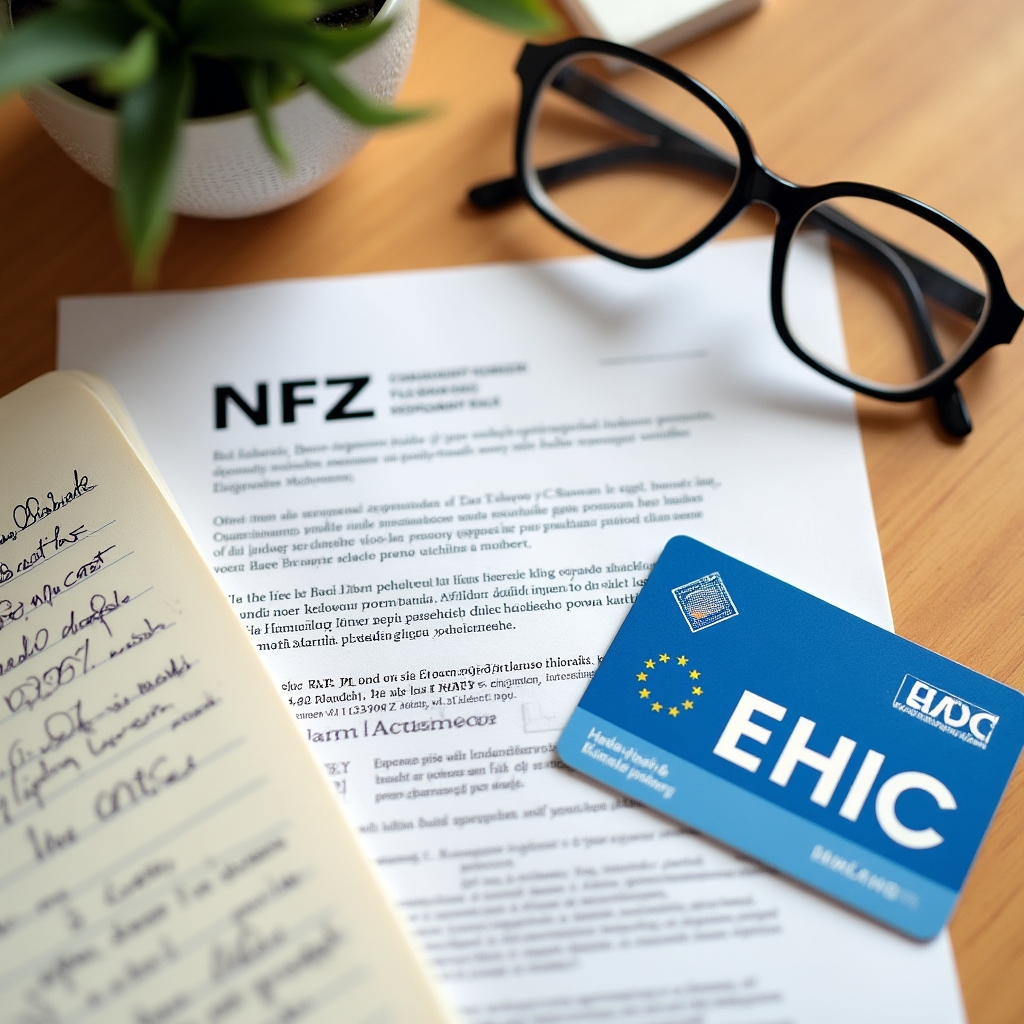
Registering with a POZ doctor
POZ stands for Podstawowa Opieka Zdrowotna, which translates roughly as Primary Healthcare. Your POZ doctor is your GP equivalent: the first point of contact for non-emergency issues, the person who issues referrals to specialists, and the one who manages ongoing conditions.
To register, you visit a clinic (przychodnia) that has an NFZ contract and ask to fill in a deklaracja wyboru lekarza - a declaration of choice form. You can change your POZ doctor twice per year at no cost. Bring your PESEL number, your NFZ insurance confirmation if you have it, and an ID document.
Some clinics have English-speaking staff. Others do not. Showing a printed or phone-screen version of the phrase "Chcę złożyć deklarację wyboru lekarza POZ" (I want to file a declaration of choice for a POZ doctor) gets the process started without any spoken Polish.
Read the full POZ registration guide
SOR: hospital emergency departments
SOR stands for Szpitalny Oddział Ratunkowy, meaning hospital emergency ward. It is the Polish equivalent of an A&E or ER. SOR operates around the clock and is the correct destination for genuinely urgent or life-threatening situations: chest pain, severe breathing difficulty, serious injuries, stroke symptoms, and similar emergencies.
SOR is not a walk-in clinic for non-urgent issues. Patients are triaged on arrival, and those with minor complaints will wait a very long time because acute cases take priority. For non-emergency situations outside GP hours, the after-hours primary care service (Nocna i Świąteczna Opieka Zdrowotna) is more appropriate.
When you arrive at SOR, you will be asked to register at the reception. You do not need to speak Polish to receive emergency treatment. EU citizens can present their EHIC. Non-EU residents should present their NFZ documentation or insurance details. Treatment is not denied for lack of documentation in genuine emergencies.
Read the full SOR guide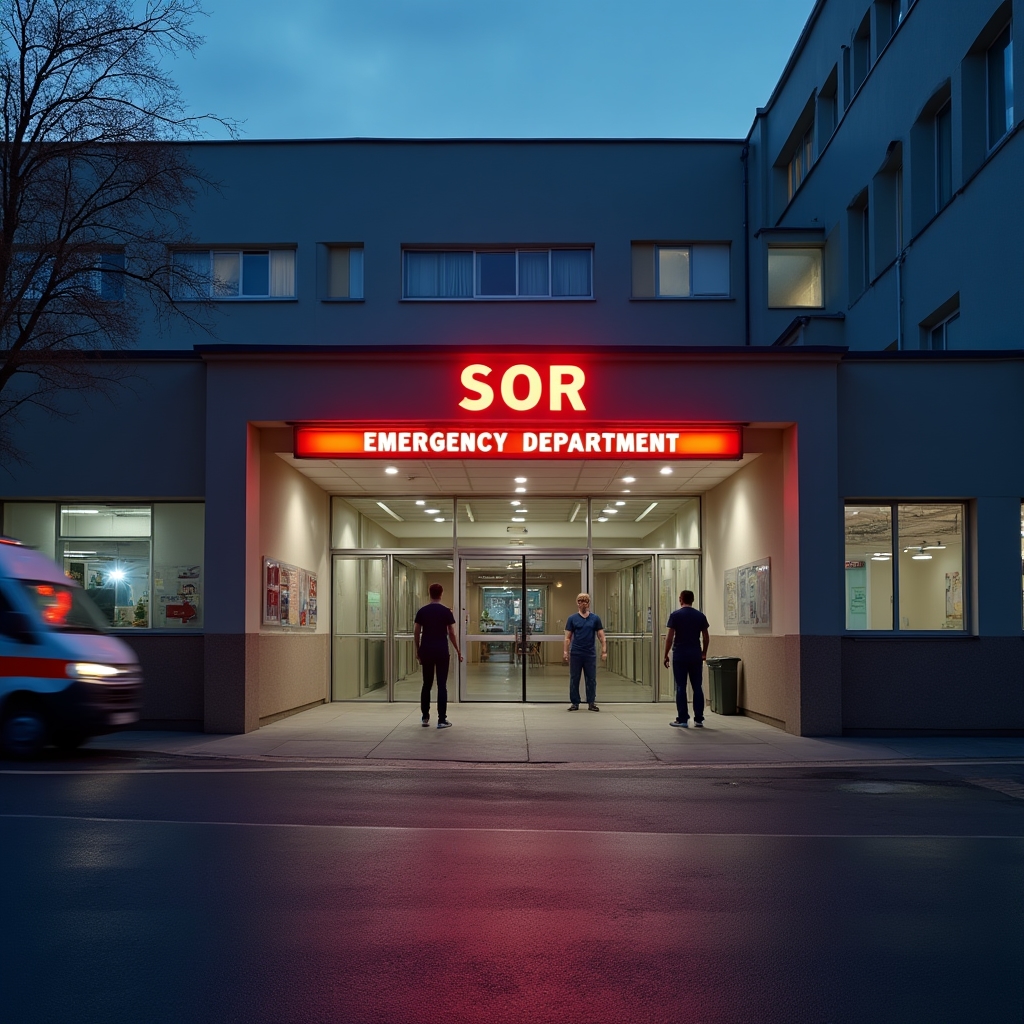
Getting a prescription filled at a Polish pharmacy
Polish pharmacies (apteka, marked with a green cross) are widespread and generally well-stocked. In Poland, prescriptions are now issued electronically in most cases. Your doctor sends the prescription to a central system and gives you a four-digit code (or the prescription appears in your IKP patient account). You present this code at any pharmacy and they retrieve it digitally.
If the pharmacist does not speak English, showing the four-digit code on your phone is usually sufficient. The system tells them everything they need. If your prescription was issued on paper (a rarer situation), the pharmacist reads the Latin drug names and dosage, so language is less of a barrier than it might seem.
Some medications require a prescription with a specific colour (white for standard, pink for controlled substances, blue for certain categories). Your doctor handles this automatically. If a medication is not available in that branch, pharmacists can check availability at other locations or order it for next-day collection.
Read the full pharmacy guide
Teleplatforma Pierwszego Kontaktu
Teleplatforma Pierwszego Kontaktu (TPK) is a national telehealth service operated by NFZ. It provides remote medical consultations by phone or video for patients who cannot reach their own POZ doctor, for after-hours situations, and for people who need a first-contact consultation without travelling to a clinic.
To use TPK, you call the dedicated number (800 137 200, free from Polish networks) or access it through the IKP patient portal. The service is available on weekdays and at weekends during certain hours. The doctor you speak with can issue a referral, an electronic sick note, or an electronic prescription, all of which feed into the same national system your regular GP uses.
Language is a practical challenge here. TPK consultations are conducted in Polish. If your Polish is limited, having a Polish-speaking friend or colleague on a second phone to relay the conversation is the most practical workaround currently available through this public channel.
Read the full Teleplatforma guide
POZ clinic vs SOR: which one to go to
The most common question from people new to Poland. The short answer: POZ for everyday issues, SOR for genuine emergencies.
Go to your POZ clinic
Or the after-hours primary care service
- Fever, cold, flu-like symptoms
- Ongoing chronic condition management
- Request for a specialist referral
- Prescription renewal
- Minor infections and skin conditions
- Blood tests and routine diagnostics
- Sick note (zwolnienie lekarskie)
Go to SOR
Or call 112 for immediate emergencies
- Chest pain or suspected heart attack
- Stroke symptoms (face drooping, arm weakness, speech)
- Severe breathing difficulty
- Serious injuries or suspected fractures
- Loss of consciousness
- Severe allergic reaction
- Poisoning or overdose
Situations this guide covers

What people want to know first
A PESEL number is the Polish national identification number and it is needed for full registration in the NFZ system, including registering with a POZ doctor and accessing the IKP patient portal. If you are employed in Poland, your employer typically arranges your PESEL registration as part of the work permit process.
If you do not yet have a PESEL, you can still receive emergency treatment at SOR. EU and EEA citizens can also present a valid European Health Insurance Card (EHIC) for medically necessary treatment. Non-EU citizens without a PESEL should contact the nearest NFZ regional branch (oddział wojewódzki) to understand their specific situation, as rules vary by residence status and nationality.
For most NFZ-funded specialist appointments, you need a referral (skierowanie) from your POZ doctor. There are some exceptions: dermatology, ophthalmology, gynaecology and obstetrics, oncology, psychiatry, and a few others can be accessed directly without a referral under NFZ rules. This list has changed over time, so it is worth checking the current NFZ guidance.
If you visit a private clinic, referrals are generally not required but the cost is paid out of pocket. Some private clinics have hybrid arrangements with NFZ, so it is worth asking whether they have an NFZ contract (kontrakt z NFZ) when you book.
When employment ends in Poland, NFZ coverage continues for 30 days from the date your employer deregisters you from ZUS. After that period, if you are registered as unemployed with the local Labour Office (Urząd Pracy), the Labour Office registers you for NFZ health insurance and coverage continues at no direct cost to you.
If you are not registered as unemployed and not employed, you can sign up for voluntary NFZ contributions. This involves contacting your regional NFZ branch, signing a contract, and paying monthly contributions. The amount is based on a percentage of a declared income base. This option is available to people who are not covered through any other route.
NFZ covers a limited range of dental services for adults. This generally includes examinations, X-rays, extractions, basic fillings in amalgam, and emergency pain relief. Cosmetic treatments, crowns, bridges, implants, tooth whitening, and composite (white) fillings on most teeth are not covered and are paid out of pocket.
Children up to age 18 have broader NFZ dental coverage. Pregnant women also have access to some additional NFZ dental benefits. To access NFZ dental care, you need to find a dentist with an NFZ contract. Not all dentists accept NFZ patients, and those who do may have waiting lists. The NFZ website has a facility finder (wyszukiwarka placówek) where you can filter by service and NFZ contract status.
The most straightforward way is through the IKP portal (Internetowe Konto Pacjenta) at pacjent.gov.pl. After logging in with your trusted profile (Profil Zaufany) or bank authentication, the portal shows your current insurance status, the employer or institution through which you are covered, and your coverage history.
Alternatively, you can call the NFZ information line (800 392 976, free from Polish networks) or visit your nearest NFZ regional branch in person. If you go in person, bring your PESEL number and an ID document. The branch can print a confirmation of your insurance status, which some clinics request when you register.
Profil Zaufany (Trusted Profile) is Poland's government digital identity system. It functions as a verified online identity that lets you authenticate yourself on government platforms without needing a physical visit or paper forms. Many public services, including the IKP patient portal, NFZ online services, and ZUS (social insurance) systems, use Profil Zaufany for login.
You can create a Profil Zaufany online if your bank is on the list of supported authentication providers (most major Polish banks are), or in person at a post office, ZUS branch, or certain public offices. Once set up, it is the key that unlocks most Polish e-government services, including checking your prescriptions, referrals, and medical history through IKP.
About the information on this site
All content on Locagu is compiled from publicly available information published by NFZ (Narodowy Fundusz Zdrowia), the Polish Ministry of Health, and other official government sources. Nothing on this site constitutes medical advice, clinical guidance, or a recommendation about your personal health situation. Locagu is not a healthcare provider and does not have any affiliation with NFZ or any medical institution. For medical questions, consult a qualified healthcare professional. For coverage or administrative questions, contact your NFZ regional branch directly.